Research Article | | Peer-Reviewed

Vegetative Propagation of Bombax costatum Pellegr. Vuillet (Malvaceae) by Root Segment Cutting: Effect of Substrate and Length of Cuttings in the Guinean Savannas Highlands (Adamawa Cameroon)

Received: 13 November 2025     Accepted: 27 November 2025     Published: 2 February 2026
Views:       Downloads:
Abstract

Bombax costatum is a native species of significant socioeconomic importance in the Guinean savannah highlands of Cameroon. This study aimed to evaluate the effects of substrate type and root cutting length on the regenerative capacity of root segments, specifically their ability to produce new leafy shoots and adventitious roots. Root systems were excavated from adult mother plants, and fragments of lateral roots were collected, transported in a cooler and processed in a nursery. The root segments were cut into cuttings of 10, 15, and 20cm in length. These root segment cuttings were then inserted in three substrate mixtures: sand/sawdust, topsoil/sawdust, and pure fine sand. The experimental design was a split-plot with three replications. 270 root segment cuttings were used. Results indicated that the substrate type significantly (p<0.05) influenced bud break, with the highest percentage observed in the sand/sawdust mixture (56.7±3.9%) and the lowest in the topsoil/sawdust mixture (41.11± 1.91%). Similarly, cutting length had a significant effect (p<0.05), with the highest bud break rate achieved by 20cm cuttings (61.66 ±1.96%) compared to 10cm cuttings (48.95 ± 1.87%). Rooting rates were also significantly affected by substrate (p<0.05), being highest in the sand/sawdust mixture (51.97±2.72%) and lowest in the Ts/Sd mixture (21.28 ± 2.81%). The 20cm cuttings promoted the highest rooting rate (64.61±0.27%), which was significantly higher (p<0.05) than those of the 10cm cuttings (18.35±2.72%). In conclusion, a sand/sawdust substrate mixture and a cutting length of 20cm were identified as the most favourable conditions for the vegetative propagation of Bombax costatum. These findings demonstrate the species' potential for domestication through root cutting techniques.

Published in American Journal of Agriculture and Forestry (Volume 14, Issue 1)
DOI 10.11648/j.ajaf.20261401.13
Page(s) 18-29
Creative Commons

This is an Open Access article, distributed under the terms of the Creative Commons Attribution 4.0 International License (http://creativecommons.org/licenses/by/4.0/), which permits unrestricted use, distribution and reproduction in any medium or format, provided the original work is properly cited.

Copyright

Copyright © The Author(s), 2026. Published by Science Publishing Group

Keywords

Guinea Savannah Highlands, Vegetative Propagation, Domestication, Substrate, Length of RSC

1. Introduction
Spontaneous fruit tree species hold significant nutritional value and play a crucial role in enhancing food security and socio-economic conditions for rural populations across Africa . This importance is particularly pronounced in the Sudanian and Sahelian zones, where woody perennials form a fundamental component of agricultural production systems . Despite their economic and social utility, these tree populations are experiencing severe degradation a trend initiated by the droughts of the 1970 and exacerbated by anthropogenic pressures . Key drivers of this decline include agricultural expansion, uncontrolled bushfires, overgrazing, unsustainable harvesting of forest products and the intensifying effects of climate change . Consequently, many woody species are subject to overexploitation, leading to regressive population dynamics characterized by a notable absence of natural regeneration and a lack of juvenile individuals . This degradation threatens biodiversity and erodes the genetic diversity that is vital for species adaptation and resilience . The resultant population declines jeopardize the food, economic, and cultural security of local communities and increase the risk of losing invaluable endogenous knowledge . Bombax costatum is a prominent example of a species facing such threats. It is highly valued in Northern Cameroon for its nutritional, medicinal and artisanal uses . However, destructive harvesting practices, particularly the cutting of entire branches to collect flowers, are highly detrimental. This practice severely reduces fruit and seed set, significantly limiting the species' potential for natural sexual reproduction . Furthermore, while traditionally used for domestic purposes, the species is now increasingly targeted for artisanal woodcraft in urban centers, placing additional pressure on populations . The combined effect of these pressures has rendered B. costatum increasingly rare in countries such as Cameroon and Burkina Faso . Although sexual propagation is a well-established method for woody plants, it presents challenges for conservation and domestication efforts. It often requires substantial material investment, a precise understanding of seed physiology, and involves a prolonged juvenile growth phase . For B. costatum, a significant knowledge gap exists regarding its capacity for vegetative propagation, which represents a critical handicap for its rapid multiplication. Therefore, the domestication of B. costatum is urgently needed to ensure its conservation and sustainable use. Introducing it into agroforestry systems could simultaneously contribute to food security and biodiversity conservation . This study aims to address this need by investigating the potential for vegetative propagation of Bombax costatum using root segment cuttings (RSCs). The general objective is to develop a reliable propagation protocol to support conservation efforts and facilitate its reintroduction into local farming systems. Specifically, we evaluate the effects of substrate type and cutting length on regeneration success. The hypothesis link to the objective is that the substrate and cutting length influence the formation of new buds and adventitious roots of root segment cuttings of Bombax costatum.
2. Materials and Methods
2.1. Study Site and Plant Material Collection
Root segments were collected from the locality of Karna-Manga, situated within the High Guinean Savannas of the Adamawa Plateau in Cameroon. The region features a Sudano-Guinean altitudinal climate, characterized by a humid to semi-humid regime with two distinct seasons a rainy season from April to October and a dry season from November to March . The predominant soils are ferralitic developed on ancient basaltic bedrock . The native vegetation is tree shrub savanna, dominated by species such as Daniellia oliveri and Lophira lanceolata which are under significant threat from anthropogenic activities . From this site, the root systems of ten mature Bombax costatum genotypes were carefully excavated. Fragments of lateral roots were collected immediately placed in a cooler to prevent desiccation and transported to the propagation nursery.
2.2. Experimental Setup and Propagation Environment
The propagation trial was conducted in a growth chamber situated under a modern shade shed at the Biodiversity and Sustainable Development Laboratory of the University of Ngaoundéré, located in Bini (altitude: 1,079 m; latitude: 7°24′ N; longitude: 13°32′ E). The propagator, constructed from local materials, consisted of a wooden frame covered with a transparent polyethylene film to maintain high internal humidity. The internal substrate bed was stratified as follows, from bottom to top: a base layer of large stones, overlain by successive layers of medium stones, gravel, fine sand, and finally the experimental rooting substrates . This design ensured optimal drainage. The conditions inside the propagator were maintained at high humidity and moderate light intensity to promote the development of cuttings .
2.3. Preparation of Root Segment Cuttings and Experimental Design
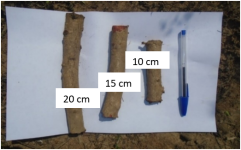
The preliminary work consisted of a careful excavation of the root system of 10 individuals of Bombax costatum in Karna Manga savanna. The selection of individuals was focused on the phenotypic aspect (adult and healthy). To minimize tissue dehydration, the sampling of root segments was carried out in the early hours of the morning when the cells are still turgid (Mapongmetsem et al., 2012b). Their transport from Karna Manga to the nursery was done using a cooler containing ice blocks. Upon arrival at the nursery, the collected root fragments were cut into segments of defined lengths: 10cm, 15cm, and 20cm. The proximal end of each segment was identified and marked (Figure 1). These Root Segment Cuttings (RSCs) were then placed in an upright position into one of three pre-prepared substrate treatments: An homogeneous mixture of sand and sawdust (1/1 ratio); An homogeneous mixture of topsoil and Sawdust (1/1 ratio); A control substrate of pure fine sand. For all treatments, the proximal end of each cutting was left exposed, approximately 1cm above the substrate surface. The experiment was arranged in a split-plot design with three replications. Substrate type was considered the main plot factor, and cutting length the sub-plot factor.
Figure 1. Different ranges of cutting lengths.
2.4. Data Collection and Analysis
The cuttings were watered daily using a hand sprayer (16 liter of capacity) to maintain high humidity without causing waterlogging. For budding, data collection began from the date of the appearance of the first buds and was subsequently carried out on a weekly basis. The following parameters were recorded: The percentage of RSCs that produced aerial axis; the number of aerial axis per sprouted cutting; the height of the aerial axis; the number of leaves per axis and the position of bud emergence on the root segment. As for rooting parameters, they were recorded at the end of the experiment, twenty-four weeks after putting the cuttings into culture. The parameters focused on the percentage of RSCs that produced adventitious roots; the number of roots per rooted cutting and the length of the roots.
2.5. Statistical Analysis
All collected data were subjected to analysis of variance. The experimental design was a split-plot with three replications, where the substrate type was the main plot factor (topsoil/sawdust mixture, sand/sawdust mixture and sand) and the cutting length (10cm, 15cm and 20cm cuttings) was the sub-plot factor. The experimental unit consisted of 10 RSC which were randomized within each sub-plot. A total of 270 cuttings that is 10 x 3 x 3 x 3 were handled. 90 RSC per treatment were manipulated. The statistical analyses conducted concern analysis of variance. Mean separation was performed using Duncan's new multiple range test. All statistical analyses were conducted using Statgraphics Plus 6.0. Figures were generated using Microsoft Office Excel.
2.6. Ethical Approval
For this study, formal authorization for the collection of superficial root segments of Bombax costatum was granted by the Biodiversity Conservation Officer of the Northern-Cameroun region. All plant material was collected in compliance with international conservation guidelines for species protection, ensuring minimal impact on the source populations.
3. Results
3.1. Budding
3.1.1. Bud Break and Shoot Development in Root Segment Cuttings
Root Segment Cuttings (RSCs) were established in June. The first aerial shoots appeared after seven weeks in substrates containing wood shavings (sand/sawdust and topsoil/sawdust mixtures). The RSCs produced adventitious buds that subsequently developed into leafy shoots.
(i). Effect of Substrate on the Budding Rate
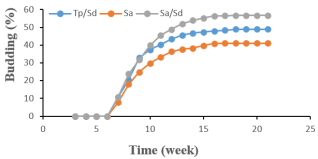
Sa/Sd = Sand/Sawdust; Ts/Sd = Topsoil/Sawdust; Sa = Sand

Download: Download full-size image

Figure 2. Effect of substrate on the budding rate.
Twenty-four weeks after putting the cuttings into culture, the budding rate varied significantly among substrates. Analysis of variance shows a significant difference (p< 0.05) (Figure 2). The highest rate was observed in the sand/sawdust (Sa/Sd) mixture (56.7±3.97%), which was significantly greater than that of the topsoil/Sawdust (Ts/Sd) mixture (41.11 ± 1.91%).
(ii). Effect of Length Classes
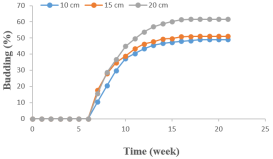
Figure 3. Effect of length of RSC on the budding rate.
All lengths of root segment cuttings budded. The budding rate varies from 48.95±1.97% for 10cm cuttings to 61.66±1.96% for 20cm cuttings (Figure 3). The analysis of variance shows a significant difference between length classes (p < 0.05).
(iii). Effect of Substrate and Cutting Length Interaction on the Budding Rate
The budding rate varies from 10.27 ± 0.18% for 10cm cuttings in sand to 37.79 ± 1.92% for those of 20cm cuttings in the sand/sawdust substrate (Table 1). However, the analysis of variance did not shows a significant difference (p > 0.05).
Table 1. Influence of the substrate and cuttings length interaction on budding.

Substrate/Cutting length

10cm

15cm

20cm

Average

Topsoil/Sawdust

12.58±0.34

17.72±0.56

26.66±0.37

18.97±0.42

Sand

10.27±0.18

12.92±0.48

12.50 ±0.25

11.9±0.30

Sand/Sawdust

25.28±0.91

32.93 ±1.78

37.79±1.92

32±1.54

Average

16.04±0.48

21.19±0.94

25.65±0.85

20.96±0.76

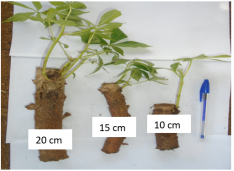
Figure 4. Budded cuttings of different lengths.
During the experiment, the newly formed buds developed into leafy axis. In the 20cm long root segment cuttings, the leafy shoots were more developed and branched compared to those of the shorter root segment cuttings (Figure 4).
3.1.2. Number of Aerial Axes
(i). Effect of Substrate
The number of aerial axes ranged from 1.02 ± 0.24 in topsoil/sawdust mixture to 2.06 ± 0.36 in the sand/sawdust mixture. Analysis of variance revealed a significant difference between the substrates (p< 0.05) (Table 2).
Table 2. Effect of the substrate on the number of aerial axes.

Substrate

Topsoil/ sawdust

Sand

Sand/sawdust

Number of aerial axes

1.02±0.24a

1.44±0.31ab

2.06±0.36b

The means followed by the same letter are statistically identical (P > 0.05)
(ii). Effect of Length of RSC
The number of leafy axes (shoots) produced per sprouted cutting ranged from 1.30 ± 0.28 for 15cm cuttings to 1.85 ± 0.19 for the 20cm cuttings. Analysis of variance indicated that the effect of cuttings length on the number of leafy axes was not significant (p> 0.05) (Table 3).
Table 3. Number of aerial axes according to the length of cuttings.

Cuttings length

10cm

15cm

20cm

Number of leafy axes

1.58±0.42

1.30±0.28

1.85±0.19

(iii). Interaction Effect of Substrate and Cuttings Length on the Number of Leafy Axes
Table 4. Effect of substrate and cuttings length interaction on the number of aerial axes.

Substrate/Cuttings length

10cm

15cm

20cm

Average

Topsoil/sawdust

1.25±0.57

1.40±0.36

1.69±0.31

1.44±0.41

Sand

1.00±0.81

1.10±0.40

1.80±0.30

1.30±0.50

Sand/sawdust

2.07 ±0.31

1.50 ±0.66

2.50 ±0.36

2.02±0.44

Average

1.44±0.56

1.33±0.47

1.99±0.32

1.59±0.45

The combined effect of substrate and cutting length on the number of aerial axes was also analyzed. The number of shoots ranged from 1.00±0.81 for 10cm cuttings cultivated in pure sand to 2.50 ±0.36 for 20cm cuttings cultivated in the Sand/sawdust mixture (Table 4). However, analysis of variance showed that this interaction effect was not significant (p> 0.05).
3.1.3. Height of Aerial Axes
(i). Effect of Substrate
Table 5. Height of aerial axes by substrate.

Substrate

Topsoil/Sawdust

Sand

Sand/Sawdust

Height (cm)

6.10±0.66

5.01±0.85

6.57±0.98

The average height of aerial axes recorded ranges from 5.01±0.85cm in sand to 6.57±0.98cm in sand/sawdust mixture. The analysis of variance does not reveal a significant difference between the substrates (p˃ 0.05) (Table 5).
(ii). Effect of RSC Length on the Height of Aerial Axes
The height of aerial axes varies from 4.72±0.76cm for 15cm cuttings to 6.74±0.50cm for those of 20cm cuttings (Table 6). The analysis of variance does not show a significant difference between the lengths (p> 0.05).
Table 6. Effect of length of RSC on the height of aerial shoot.

Cutting length

10cm

15cm

20cm

Heights (cm)

6.22±1.14

4.72±0.76

6.74±0.50

(iii). Substrate and Length of Cuttings Interaction on the Height of Aerial Axes
The average height of aerial axes ranged from 3.55 ± 2.16cm for 10cm cuttings grown in sand to 9.02±0.96cm for 20cm cuttings grown in the sand/sawdust mixture (Table 7). Analysis of variance showed that the substrate and cuttings length interaction was not significant (p> 0.05).
Table 7. Effect of the substrate/cuttings length interaction on the height of air axes.

Substrate/Cuttings length

10cm

15cm

20cm

Average

Topsoil/sawdust

7.47±1.53

4.88±0.96

5.95±0.84

6.10±1.11

Sand

3.55±2.16

4.60±1.08

5.83±0.81

4.66±1.35

Sand/sawdust

6.90 ±2.16

4.68±1.76

9.02±0.96

6.87±1.62

Average

6.68±1.95

4.72±1.26

6.22±0.87

5.87±1.36

3.1.4. Number of Leaves
(i). Effect of the Substrate on the Number of Leaves
The number of leaves per shoot varied across substrates, ranging from 2.10 ± 0.31 in the pure sand treatment to 2.97 ± 0.36 in the sand/sawdust mixture (Table 8). However, analysis of variance showed that the effect of substrate on leaves number was not significant (p> 0.05).
Table 8. Number of leaves per substrate.

Substrat

Topsoil/sawdust

Sand

Sand/sawdust

Number of leaves

2.67±0.24

2.10±0.31

2.97±036

(ii). Effect of the Length of the Cuttings on the Number of Leaves
The number of leaves per shoot ranged from 2.37±0.28 for 15cm cuttings to 2.70±0.18 for those of 20cm cuttings (Table 9). Analysis of variance showed no significant effect of cuttings length despite this slight variation (p> 0.05).
Table 9. Number of leaves by range of cuttings length.

Cuttings length

10cm

15cm

20cm

Number of leaves

2.66±0.42

2.37±0.28

2.70±0.18

(iii). Effect of Substrate and Cuttings Length Interaction on the Number of Aerial Shoots
The interaction between substrate and cutting length was evaluated for its effect on leaf development. The mean number of leaves per shoot ranged from 2.00 ± 0.79 for 10cm cuttings in the sand to 3.28 ± 0.35 for 20cm cuttings in sand/sawdust mixture (Table 10). Despite this variability, analysis of variance showed that the substrate and cuttings length interaction effect on leaves number was not significant (p>0.05).
Table 10. Influence of the substrate and cuttings length interaction on the number of leaves.

Substrate/Cuttings length

10cm

15cm

20cm

Average

Topsoil/sawdust

3.00±0.56

2.50±0.35

2.53±0.31

2.67±0.40

Sand

2.00±0.79

2.10±0.39

2.30±0.30

2.13 ±0.49

Sand/sawdust

3.00±0.79

2.62±0.66

3.28 ±0.35

2.96±0.60

Average

2.66±0.64

2.41±0.46

2.37±0.37

2.46±0.49

3.2. Rooting
3.2.1. Rooting of Cuttings
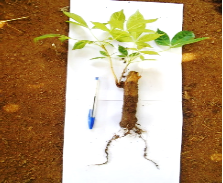
During the experiment, newly formed buds developed and subsequently gave rise to adventitious roots. The first adventitious roots appeared in the sand/Sawdust (Sa/Sd) substrate 12 weeks after the root segment cuttings (RSCs) were planted. Qualitatively, the longer RSCs (20cm) exhibited more prolific root development than the shorter segments (Figure 5).
Figure 5. Cutting of a leafy and rooted root segment cutting of Bombax costatum.
(i). Effect of Substrate on Rooting Percentage
Table 11. Percentage of rooting based on substrates.

Substrate

Topsoil/sawdust

Sand

Sand/ sawdust

Rooting (%)

21.28±2.81a

34.71±2.51b

51.97±2.72c

The means followed by the same letter are statistically identical at the 5% level.
Twenty-one weeks after cultivation, analysis of variance shows that rooting percentage of the cuttings varied significantly among substrates (p<0.05) (Table 11). The highest rooting rate was observed in the sand/sawdust (Sa/Sd) mixture (51.97 ± 2.72%), which was significantly greater than that in the topsoil/sawdust mixture (21.28 ± 2.81%) and sand (34.71 ± 2.51%).
(ii). Effect of Length of Cuttings on Rooting
The rooting rate of cuttings varies from 18.35±2.72% for 10cm cuttings to 64.61±0.27% for 20cm cuttings (Table 12). The analysis of variance shows a significant difference between length classes (p< 0.05).
Table 12. Effet of length of RSc on rooting rate.

Cuttings length

10cm

15cm

20cm

Rooting (%)

18.35±2.72a

25.41±0.28b

64.61±0.27c

The means followed by the same letter are statistically identical at the 5% level.
(iii). Effect of Substrate and Cuttings Length Interaction on Rooting Rate
The rooting rate ranged from 7.89±1.89% for 10cm cuttings cultivated in Topsoil/sawdust mixture to 86.66±3.44% for 20cm cuttings cultivated in the sand/sawdust mixture (Table 13). Analysis of variance showed a significant difference (p < 0.05).
Table 13. Substrate/ cuttings length interaction on the rooting of cuttings.

Substrate/Cuttings length

10cm

15cm

20cm

Average

Topsoil/sawdust

7.89±1.89a

13.87±0.77ab

48.09±3.56ab

23.28±2.07

Sand

19.42±2.09ab

22.68±1.89ab

59.08±2.07ab

33.73±2.017

Sand/sawdust

27.01±2.41ab

39.79±2.57ab

86.66±3.44b

51.15±2.81

Average

18.35±2.13

25.41±1.74

64.61±3.02

36.12±0.49

The means followed by the same letter are statistically identical at the 5% level.
3.2.2. Number of Newly Formed Roots by Cutting
Effect substrate on the number of adventitious roots
The root number ranged from 3.27±2.76 in the topsoil /sawdust mixture to 10.47±3.64 in the sand/sawdust substrate (Table 14). Analysis of variance shows a significant difference between the substrates for these parameters (p < 0.05).
Table 14. Variation of the number of roots according to the substrates.

Substrate

Topsoil/sawdust

Sand

Sand/sawdust

Number of neoformed roots

3.27±2.76a

5.71±2.51b

10.47±3.64c

The means followed by the same letter are statistically identical at the 5% level.
3.2.3. Effect of Cuttings Length on the Number of Adventitious Roots
The number of newly formed roots ranged from 3.35±1.72 for 10cm cuttings to 9.61±3.49 for 20cm cuttings (Table 15). Analysis of variance showed a significant difference between the lengths of cuttings for these parameters (p < 0.05).
Table 15. Variation of the number of roots based on lengths of cuttings.

Cuttings length

10cm

15cm

20cm

Number of neoformed roots

3.35±1.72a

6.41±0.28b

9.61±3.49c

The means followed by the same letter are statistically identical at the 5% level.
3.2.4. Substrate and Cuttings Length Interaction on the Number of Adventitious Roots
Table 16. Substrate and cuttings length interaction on the number of roots emitted.

Substrate/length

10cm

15cm

20cm

Average

Topsoil/sawdust

1.57±0.57a

3.65±0.06ab

4.89±0.87ab

3.37±0.5

Sand

3.39±0.09a

5.77±1.89ab

7.97±1.06ab

5.71±0.79

Sand/sawdust

5.09±0.41ab

9.81±1.78ab

16.53±0.19b

10.47±0.06

Average

3.35±0.36

6.41±1.24

9.79±0.71

6.52±0.45

The means followed by the same letter are statistically identical at the 5% level.
The number of roots varies between 1.57±0.57 for 10cm cuttings grown in the topsoil/sawdust mixture and 16.53±0.19 for 20cm cuttings grown in the sand/sawdust mixture (Table 16). The analysis of variance shows a significant difference (p< 0.05).
3.2.5. Length of Adventitious Roots
(i). Effect of the Substrate on the Length of Adventitious Roots
Table 17. Effect of substrate on the length of roots.

Substrates

Topsoil//Sawdust

Sand

Sand/Sawdust

Length of roots

3.5±1.72a

5.68±0.28a

10.62±3.49c

The means followed by the same letter are statistically identical at the 5% level.
Substrate type had a clear effect, with root length ranging from 3.5 ± 1.72cm in the topsoil/sawdust mixture to 10.62 ± 3.49cm in the sand/sawdust substrate (Table 17). Analysis of variance also revealed that substrate had a significant effect on root length (p< 0.05).
(ii). Effect of RSC Length on the Length of Adventitious Roots
The length of newly formed roots ranges from 2.15±1.72cm in 10cm cuttings to 9.85±3.49cm in 20cm cuttings (Table 18). The analysis of variance shows a significant difference between the lengths of cuttings (p< 0.05).
Table 18. Root size according to cuttings length.

Cuttings length

10cm

15cm

20cm

Length of adventitious roots (cm)

2.15±1.72a

6.17±0.28b

9.85±3.49c

The means followed by the same letter are statistically identical at the 5% level.
(iii). Influence of Substrate and RSC Length on Adventitious Root Length
Table 19. Substrate and cuttings length interaction on the length of emitted roots.

Substrate/length

10cm

15cm

20cm

Average

Topsoil/sawdust

1.97±0.87

2.56±0.76

5.98±1.87

3.50±1.17

Sand

3.39±1.05

5.87±1.98

7.78±1.46

5.68±1.50

Sand/sawdust

7.09±2.72

10.41±2.78

14.35±1.91

10.62±2.47

Average

4.15±1.55

6.28±1.84

9.37±2.62

6.6±0.45

The length of the roots varied from 1.97±0.87cm in the 10cm cuttings cultivated in the topsoil/sawdust mixture to 14.35±1.91cm in the 20cm cuttings cultivated in the sand/sawdust mixture (Table 19). The analysis of variance indicated no significant difference (p> 0.05).
4. Discussion
4.1. Bud Break and Shoot Development in Root Segment Cuttings
The regenerative capacity of root segment cuttings (RSCs) varies significantly among species. This ability is primarily attributed to the presence of primary meristematic cells within preformed calluses, which can differentiate into adventitious caulinary meristems . The regeneration process is regulated by a complex interplay of factors, and optimal outcomes are achieved when these factors act synergistically. In the present study on Bombax costatum, the first bud emergence was observed seven weeks after cultivation. This timeline is comparable to that reported for Securidaca longepedunculata (six weeks) but contrasts with findings for Sclerocarya birrea under similar ecological conditions . Such interspecific variation in bud break precocity may be influenced by factors including ecology, pedoclimatic conditions, season of collection, and genotypic differences. Moreover, external conditions such as temperature and light within the propagator, which strongly affect RSC regeneration , were likely key contributors to the observed results.
4.1.1. Influence of Substrate on Regeneration
After 24 weeks, the sand/sawdust (Sa/Sd) substrate mixture did not significantly enhance all measured growth parameters because substrate had a non-significant effect on shoot height and leaf number. The superior performance of this porous substrate can be explained by its physical properties, which facilitate optimal water drainage and oxygen circulation around the root zone, thereby preventing rot and promoting healthy development. This result is comparable to that reported on Securidaca longepedunculata in the Guinean savannas of Cameroon , underscoring the importance of substrate composition for rooting ability. However, the best-performing substrate can vary among species. For instance, Mapongmetsem et al. (2016b) observed a high bud break percentage for Vitex doniana in a topsoil/sawdust mixture. This divergence suggests that although homogeneous, well-aerated mixtures are generally effective, the optimal substrate blend may be species-specific. The observed development of leafy axes at the proximal pole in B. costatum is consistent with general plant physiology, although interspecific and environmental variations may occur.
4.1.2. Influence of Cutting Length on the Budding Rate
A clear positive correlation was observed between cutting length and regenerative success. The 20cm root segment cuttings (RSC) exhibited significantly higher bud break percentages and adventitious root development compared to the 10cm and 15cm segments. The same trends are observed on Securidaca longepedunculata in Cameroon and Detarium microcarpum in Burkina Faso . The superiority of longer cuttings is likely attributable to their larger reserves of stored nutrients and carbohydrates, which provide the necessary energy for bud initiation and subsequent shoot elongation. Longer segments may also contain higher concentrations of endogenous phytohormones and accumulated starch, both of which are known to stimulate bud emergence and shoot development. In contrast, cutting length did not exert a significant effect on the number of aerial shoots per cutting or the number of leaves per shoot, a result corroborated by findings on Lawsonia inermis in Senegal . This suggests that while longer cuttings have a greater likelihood of sprouting, they do not necessarily produce a higher shoot number or leaf count once bud break has occurred.
4.1.3. Interaction Effects on Plant Growth
The interaction between substrate type and cutting length was not significant for any of the measured variables (bud break, shoot number, leaf number, or shoot height). This indicates that the positive effects of the optimal substrate and the optimal length (20cm) were independent and additive rather than synergistic. Such absence of interaction has also been reported for Lophira lanceolata but contrasts with findings for Vitex doniana by Djonba (2015) , thereby highlighting the species-specific nature of regenerative responses. The average shoot height was greatest in the Sa/Sd substrate, most likely due to its high porosity and favorable balance of moisture and nutrients derived from decomposing organic matter. While cutting length significantly influenced the probability of sprouting, it did not affect the subsequent shoot height of regenerated cuttings. This suggests that, once regeneration is initiated, shoot growth is governed more by the continuous supply of water and nutrients from the substrate than by the initial reserves stored within the cutting. This finding contrasts with studies on Daniellia oliveri in Benin, where 20cm cuttings produced the tallest shoots, further emphasizing that regenerative patterns are not universal across species. In conclusion, the successful vegetative propagation of Bombax costatum can be optimized using 20cm root segment cuttings planted in a well-aerated sand/sawdust substrate. This protocol represents a practical method for supporting both conservation and domestication efforts for this ecologically and socioeconomically valuable species .
4.2. Rooting
4.2.1. Rooting Dynamics and Influencing Factors
Root initiation was first observed 12 weeks after the cultivation of root segment cuttings (RSCs), subsequent to the emergence of leafy shoots. This temporal separation between shoot emergence and root formation is physiologically consistent, as the newly developed shoots must begin photosynthesis to supply the carbohydrates required for the energy-intensive process of adventitious root formation. The highest rooting rate (51.97 ± 2.72%) was recorded in the sand/sawdust substrate, confirming its superiority as the most effective medium. This enhanced performance can be attributed to the substrate’s light structure and high porosity, which facilitate oxygen diffusion at the base of the cuttings while preventing waterlogging, both of which are critical for root development. By contrast, the compact texture of pure topsoil limited oxygen availability and significantly restricted adventitious root initiation. On Securidaca longepedunculata, sand/sawdust mixture was also identified as the most suitable rooting substrate . The porosity of such mixtures promotes both drainage and aeration, creating optimal conditions for root initiation. However, substrate suitability is not universal across species . Vitex doniana, pure sand was found to be most effective, whereas in V. doniana and Lophira lanceolata, a black soil/sawdust mixture yielded the best rooting results . Such variability highlights the decisive role of species-specific physiological traits in determining the success of vegetative propagation protocols.
4.2.2. The Role of Cutting Length and Sampling Season
Cuttings length had a significant effect on rooting success. The 20cm RSCs exhibited the highest rooting rate (64.61±5.67%), which is consistent with previous findings on Detarium microcarpum and Vitex doniana . Longer cuttings generally contain greater reserves of carbohydrates and endogenous phytohormones, providing both the energy and the biochemical signals necessary for root initiation and subsequent development. The positive influence of cuttings length was most evident in the optimal substrate. A significant substrate*length interaction was observed, whereby 20cm cuttings grown in the Sa/Sd mixture achieved the best performance (10,62±2.47%). This result demonstrates that the physical properties of the Sa/Sd substrate (aeration and drainage) combined with the higher nutritional reserves of longer cuttings exert an additive effect, thereby enhancing rooting success. Moreover, the outcome of this trial was likely affected by the season of RSC collection. The cuttings were harvested during the full leafing stage of the mother plants, a period that coincides with the accumulation of carbohydrates in the roots. This timing is in agreement with Belem (2009) , who emphasized that the full leafing stage represents the optimal harvesting period for RSCs, as maximal nutrient reserves are available to support the regenerative process.
4.2.3. Root System Development
Superior root system development was consistently associated with the Sa/Sd substrate and the 20cm cutting length. The mean number of adventitious roots was significantly higher in the Sa/Sc mixture (10.47±3.64) compared to other substrates, and in 20cm cuttings (9.79±3.49) compared to shorter lengths. Likewise, the mean root length was greatest under these same conditions. This enhanced development can be attributed to the synergistic effect of two factors: the greater carbohydrate reserves in longer cuttings, which supply the structural components and energy required for root initiation and elongation, and the favorable physicochemical properties of the Sa/Sd substrate, which ensure adequate aeration and drainage, thereby promoting unimpeded root proliferation) , The significant interaction effect between substrate and cutting length confirms that maximum root growth occurs when both optimal factors are combined. Interestingly, this result contrasts with findings on Vitex doniana by Mapongmetsem et al. (2016c) , who reported no significant influence of substrate or cutting length on root number. Such divergence underscores the species-specific nature of vegetative propagation responses and highlights the need for targeted propagation protocols for each species of interest.
5. Conclusion
This study demonstrates that Bombax costatum is amenable to propagation via root segment cuttings (RSCs), exhibiting a strong regenerative capacity for both aerial shoots and adventitious roots. The sand/sawdust substrate mixture proved to be the most effective medium, yielding the highest bud break rate (56.7±3.9%) and rooting percentage (51.97± 2.72%), while a cutting length of 20cm resulted in superior performance with the highest bud break (61.66±1.96%) and rooting success (64.61±0.27%). These findings confirm that the domestication of B. costatum through vegetative propagation is feasible under the ecological conditions of the high Guinean savannas of Cameroon and provide a practical foundation for its conservation and sustainable utilization. To consolidate and expand this domestication protocol, future research should document ethnobotanical knowledge, analyze value chains to identify socio-economic opportunities for local communities, and investigate additional influencing factors such as phytohormone applications, seasonal variation in cutting collection, and the age of mother trees.
Dear Editor- in -Chief. We are pleased to submit our manuscript, "Vegetative propagation of Bombax costatum Pellegr. Vuillet (Malvaceae) by root segment cutting: effect of substrate and length of cuttings in the Guinean Savannas Highlands (Adamawa Cameroon)" for your consideration for publication in AJAF. This study investigates the vegetative propagation of Bombax costatum, an agroforestry species of significant socioeconomic importance in tropical Africa. We believe our work offers valuable insights into the domestication and conservation of this endangered species, a topic of great relevance to the readership of your journal. The authors have confirmed the following declaration, which can be included in the manuscript upon acceptance.
Abbreviations

Sa/Sd

Sand/Sawdust

RSC

Root Segment Cuttings

Sa

Sand

Ts/Sd

Topsoil

Author Contributions
Dangai Youhana: Conceptualization, Methodology, Investigation, Writing – original draft, Project administration
Fawa Guidawa: Investigation, Data curation, Formal analysis
Hamawa Yougouda: Supervision, Validation, Writing – review & editing
Oumarou Haman Zephirin: Investigation, Data curation, formal analysis
Mapongmetsem Pierre Marie: Supervision, Validation, Writing – review & editing
Funding
This research received not specific grant from any funding agency in the public, commercial, or not- for-profit sectors. It was wholly funded by the authors.
Conflicts of Interest
The authors declare not conflicts of interest.
References
[1] Asase A., Oteng-yeboah A. A., Odametten G. T. & Simmonds, M. S. J. (2005). Ethnobotanical study of Ghanaian Anti-malariat plants. J. Ethnopharmacol. Vol. 99: 273-279.
[2] Mapongmetsem P. M., Kapehie V., T efempa B. H. (2012). Disversity of local fruit tree and their contribution in sustaming the rural like lihood in the northem Cameroon. Ethiopia journal of environnemental studiean management, 5(1): 32-46.
[3] Dangai Y, Hamawa Y, Oumarou Z. H, Fawa G, Mamah. & Mapongmetsem P. M. (2020). Biophysical and floristic characterization of agroforestry parks with Daniellia oliveri in the Sudanian-Sahelian zone of Cameroon. International Journal of Applied Research, 6(9): 398-409.
[4] Boffa J. M. 2000. West African agroforestry parklands: key to conservation and sustainnble management Unasylva 500(200): 11-17.
[5] FAO, 2007. FAO response to climate change. 2 p.
[6] Belem. B. (2009). Ethnobotany and conservation of the species Bombax costatum Pel. &Vuil. (False kapok tree) in the agricultural production systems of the central plateau, in Burkina Faso. Thèse de Doctorat. 189.
[7] Noubissié J. B., Nzié., Bellefontaine R.&Mapongmetsem P. M. (2011). Vegetative propagation of Balanites aegyptiaca (L.) Del., Diospyros mespiliformis Hochst. Ex A. Rich., and Sclerocarya birrea (A. Rich.) Hochst. in Northern Cameroon. Fruits, 66, 1-16.
[8] Belem B., Boussin I. J., Bellefontaine R. & Guinko S. (2008). Situation of Bombax costatum suckering by roots in Burkina Faso. Bois et foret des Tropiques, 295(1): 71-79.
[9] UICN. (2013). How to approach REDD+ in Cameroon, Yaoundé, Cameroon: UICN. 2013.
[10] Lamy. L. G., 2013. Distribution of Detarium microcarpum (Fabaceae) Guill. Et Perr. Withim Mbé plain (Adamawa, Cameroon).20th Annual conferance. December 05th -07th 2013, Ngaoundere-cameroon. “Bioscience and one Mealth initiative”. 1 p University of Ngaoundéré Bioscience 2013.
[11] Mapongmetsem P. M., Sonou A. P., Raouguedam J., Koye L. B. & Fawa G. (2016a). Vegetative propagation of Sclerocarya birrea (A. Rich.) Hochst. from root segments cuttings: effect of substrate and root diameter. Annals of Experimental Biology, 4(2): 23 - 32.
[12] Mapongmetsem P. M. (2022). Agroforestry and economic development in Cameroon (About the resilience of tropical agriculture to global changes). In Akam A & Kouam SP. (eds.). For the community liberalism of Paul Biya. pp. 710-731, University of Ngaoundere, official launch of Doctorial 2022.
[13] Ministry of Environment and Forestry. (1994). Environmental Assessment Edition 230 p.
[14] Yonkeu S. (1983). Vegetation of the Pastures of Adamawa (Cameroon): Ecology and Pastoral Potential. Doctoral Thesis. University of Rennes I, France. 207 p.
[15] Letouzey R. (1968). Phytogeography of Cameroon. Lechevalier Edition. 518.
[16] Oumarou Z. H., Hamawa Y., Tsobou R., Abdoulaye H., Bellefontaine R., Mapongmetsem P. M. (2018). Vegetative propagation of Securidaca longepedunculata Fresen by rooting root segments. Afrique science 14(6), 388-399.
[17] Abdoulaye H., Oumarou Z. H., Dangai Y., Fawa G., Megueni. & Mapongmetsem P. M. (2020). Vegetative multiplication of Lophira lanceolata by root segment cuttings: effects of substrates and mycorrhizal inoculum. Internationale Multilinggual Journal of Science and Technology Vol (5)9, 1750-1760.
[18] Stenvall N., Haapala T. & Pulkkinen P. (2006). The role of a root cutting’s diameter and location on the regeneration ability of hybrid aspen. Forest ecology and management, 237(1-3) 150-155.
[19] Ky-Dembélé C., Tigabu M., Bayala J., Savadogo P., Boussin I. J. & Odem P. (2010). Clonal propagation of Detarium microcarpum from root cutings. Silva Fennica, 44(5): 775-787.
[20] Mapongmetsem P. M., Fawa G., Noubissie -Tchiagam J. B., Nkongmeneck B. A., Biaou S. S. H., Bellefontaine R. (2016b). Vegetative propagation of Vitex doniana Sweet from root segments cuttings. Bois et forêts des tropiques, 327(1): 29- 37.
[21] Sango D., Badji M., Leonard E. & Akpo. (2008). Possibility of in situ propagation by cuttings of Lawsonia inermis L (henné), 35.
[22] Djonba E. (2015). Vegetative multiplication of Vitex doniana Sweet. (Verbenaceae) by rooting segments of root cuttings (Adamaoua, Cameroon). Master's thesis, Faculty of Science, University of Ngaoundéré, 50 p.
[23] Houehounha R., Avohou T. H., sinsin B. & Tandjiekpon AM. (2009). Artificial regeneration of Daniellia oliveri (Rolfe) Hutchison et Dalziel. International journal of Biological and Chemical Science, 3(1): 7-19.
[24] Oumarou H. Z., Fawa G., Abdoulaye H., Dangai Y., Nduryang N., Jules B. & Mapongmetsem P. M., 2023a. Vegetative propagation by root segment cuttings of Securidaca longepedunculata Fresen: effect of diameter and insertion mode of root segment cuttings in the substrate. Research Journal of Agriculture and Forestry Sciences, 11(3): 7-14
[25] Oumarou H. Z., Guidawa F., Abdoulaye H., Dangai Y., Binwe J-B., Wangbitching J. D D. & Mapongmetsem P. M. (2023b). Vegetative propagation of Detarium microcarpum Guill. & Perr. by root segment cuttings: Effect of substrate and length of cuttings. International Journal of Research in Agronomy, 7(1): 104-109.
[26] Fawa. (2015). Phenology and mode of propagation of the three local agro-restier species of the Guinean high savannahs (Adamawa, Cameroon). Doctoral thesis /Ph. D. Uni Cameroon. 171 p. University of Ngaoundere Doctoral Thesis /Ph. D.
[27] Mapongmetsem P. M., Djomba E., Fawa G., Oumarou Z., Dangai Y. & Bellefontaine R. (2017). Vegetative Propagation of Vitex doniana Sweet from Root Segments Cuttings: Effects of Substrate and Length of Cuttings on the Rooting Ability. Annals of Experimental Biology, 5(1): 18-24.
[28] Mapongmetsem P. M., Djomba E., Fawa G., Oumarou Z. & Bellefontaine R. (2016c). Vegetative Propagation of Vitex doniana Sweet (Verbenaceae) by root segments cuttings: effects of mother tree diameter and sample distance of cutting. Journal of Agriculture and Environnement for International Development, 110(2): 293-306.
Cite This Article
  • APA Style

    Youhana, D., Guidawa, F., Yougouda, H., Zephirin, O. H., Marie, M. P. (2026). Vegetative Propagation of Bombax costatum Pellegr. Vuillet (Malvaceae) by Root Segment Cutting: Effect of Substrate and Length of Cuttings in the Guinean Savannas Highlands (Adamawa Cameroon). American Journal of Agriculture and Forestry, 14(1), 18-29. https://doi.org/10.11648/j.ajaf.20261401.13

    Copy | Download

    ACS Style

    Youhana, D.; Guidawa, F.; Yougouda, H.; Zephirin, O. H.; Marie, M. P. Vegetative Propagation of Bombax costatum Pellegr. Vuillet (Malvaceae) by Root Segment Cutting: Effect of Substrate and Length of Cuttings in the Guinean Savannas Highlands (Adamawa Cameroon). Am. J. Agric. For. 2026, 14(1), 18-29. doi: 10.11648/j.ajaf.20261401.13

    Copy | Download

    AMA Style

    Youhana D, Guidawa F, Yougouda H, Zephirin OH, Marie MP. Vegetative Propagation of Bombax costatum Pellegr. Vuillet (Malvaceae) by Root Segment Cutting: Effect of Substrate and Length of Cuttings in the Guinean Savannas Highlands (Adamawa Cameroon). Am J Agric For. 2026;14(1):18-29. doi: 10.11648/j.ajaf.20261401.13

    Copy | Download

  • @article{10.11648/j.ajaf.20261401.13,
      author = {Dangai Youhana and Fawa Guidawa and Hamawa Yougouda and Oumarou Haman Zephirin and Mapongmetsem Pierre Marie},
      title = {Vegetative Propagation of Bombax costatum Pellegr. Vuillet (Malvaceae) by Root Segment Cutting: Effect of Substrate and Length of Cuttings in the Guinean Savannas Highlands (Adamawa Cameroon)},
      journal = {American Journal of Agriculture and Forestry},
      volume = {14},
      number = {1},
      pages = {18-29},
      doi = {10.11648/j.ajaf.20261401.13},
      url = {https://doi.org/10.11648/j.ajaf.20261401.13},
      eprint = {https://article.sciencepublishinggroup.com/pdf/10.11648.j.ajaf.20261401.13},
      abstract = {Bombax costatum is a native species of significant socioeconomic importance in the Guinean savannah highlands of Cameroon. This study aimed to evaluate the effects of substrate type and root cutting length on the regenerative capacity of root segments, specifically their ability to produce new leafy shoots and adventitious roots. Root systems were excavated from adult mother plants, and fragments of lateral roots were collected, transported in a cooler and processed in a nursery. The root segments were cut into cuttings of 10, 15, and 20cm in length. These root segment cuttings were then inserted in three substrate mixtures: sand/sawdust, topsoil/sawdust, and pure fine sand. The experimental design was a split-plot with three replications. 270 root segment cuttings were used. Results indicated that the substrate type significantly (pBombax costatum. These findings demonstrate the species' potential for domestication through root cutting techniques.},
     year = {2026}
    }
    

    Copy | Download

  • TY  - JOUR
    T1  - Vegetative Propagation of Bombax costatum Pellegr. Vuillet (Malvaceae) by Root Segment Cutting: Effect of Substrate and Length of Cuttings in the Guinean Savannas Highlands (Adamawa Cameroon)
    AU  - Dangai Youhana
    AU  - Fawa Guidawa
    AU  - Hamawa Yougouda
    AU  - Oumarou Haman Zephirin
    AU  - Mapongmetsem Pierre Marie
    Y1  - 2026/02/02
    PY  - 2026
    N1  - https://doi.org/10.11648/j.ajaf.20261401.13
    DO  - 10.11648/j.ajaf.20261401.13
    T2  - American Journal of Agriculture and Forestry
    JF  - American Journal of Agriculture and Forestry
    JO  - American Journal of Agriculture and Forestry
    SP  - 18
    EP  - 29
    PB  - Science Publishing Group
    SN  - 2330-8591
    UR  - https://doi.org/10.11648/j.ajaf.20261401.13
    AB  - Bombax costatum is a native species of significant socioeconomic importance in the Guinean savannah highlands of Cameroon. This study aimed to evaluate the effects of substrate type and root cutting length on the regenerative capacity of root segments, specifically their ability to produce new leafy shoots and adventitious roots. Root systems were excavated from adult mother plants, and fragments of lateral roots were collected, transported in a cooler and processed in a nursery. The root segments were cut into cuttings of 10, 15, and 20cm in length. These root segment cuttings were then inserted in three substrate mixtures: sand/sawdust, topsoil/sawdust, and pure fine sand. The experimental design was a split-plot with three replications. 270 root segment cuttings were used. Results indicated that the substrate type significantly (pBombax costatum. These findings demonstrate the species' potential for domestication through root cutting techniques.
    VL  - 14
    IS  - 1
    ER  - 

    Copy | Download

Author Information
  • Department of Plant Production, University of Bertoua, Bertoua, Cameroon

  • Department of Biological Sciences, University of Ngaoundéré, Ngaoundéré, Cameroon

  • Department of Agriculture, University of Maroua, Maroua, Cameroon

  • Department of Plant Sciences, University of Bamenda, Bambili, Cameroon

  • Department of Biological Sciences, University of Ngaoundéré, Ngaoundéré, Cameroon

  • Abstract
  • Keywords
  • Document Sections

    1. 1. Introduction
    2. 2. Materials and Methods
    3. 3. Results
    4. 4. Discussion
    5. 5. Conclusion
    Show Full Outline
  • Abbreviations
  • Author Contributions
  • Funding
  • Conflicts of Interest
  • References
  • Cite This Article
  • Author Information